Continuous operating temperature -454°F to 500°F (-270°C to 260°C)
Outstanding resistance to almost any chemical known (exceptions: alkali metals in molten state, fluorine gas at high temperatures, chlorine trifluoride).
Chemically inert
Biocompatible, TFE is certified FDA and USP Class VI for use in diagnostic, medical, and analytical applications consisting of heat shrink tubing.
Very low coefficient of friction
Good dielectric strength
Flame rating UL94 V0 and VW-1 (file E#64007/ CSA file # 02582)
Limiting Oxygen Index greater than 95
ETO and autoclave sterilizable
ASTM D876 and ASTM D 1675 approved
Mil spec approved AMS-DTL-23053/12
MIL-STD-104 approved
MIL-STD-2073-1: DOD material procedure for development and application of packaging requirements.
Tested by SAE for Aerospace Material Specifications
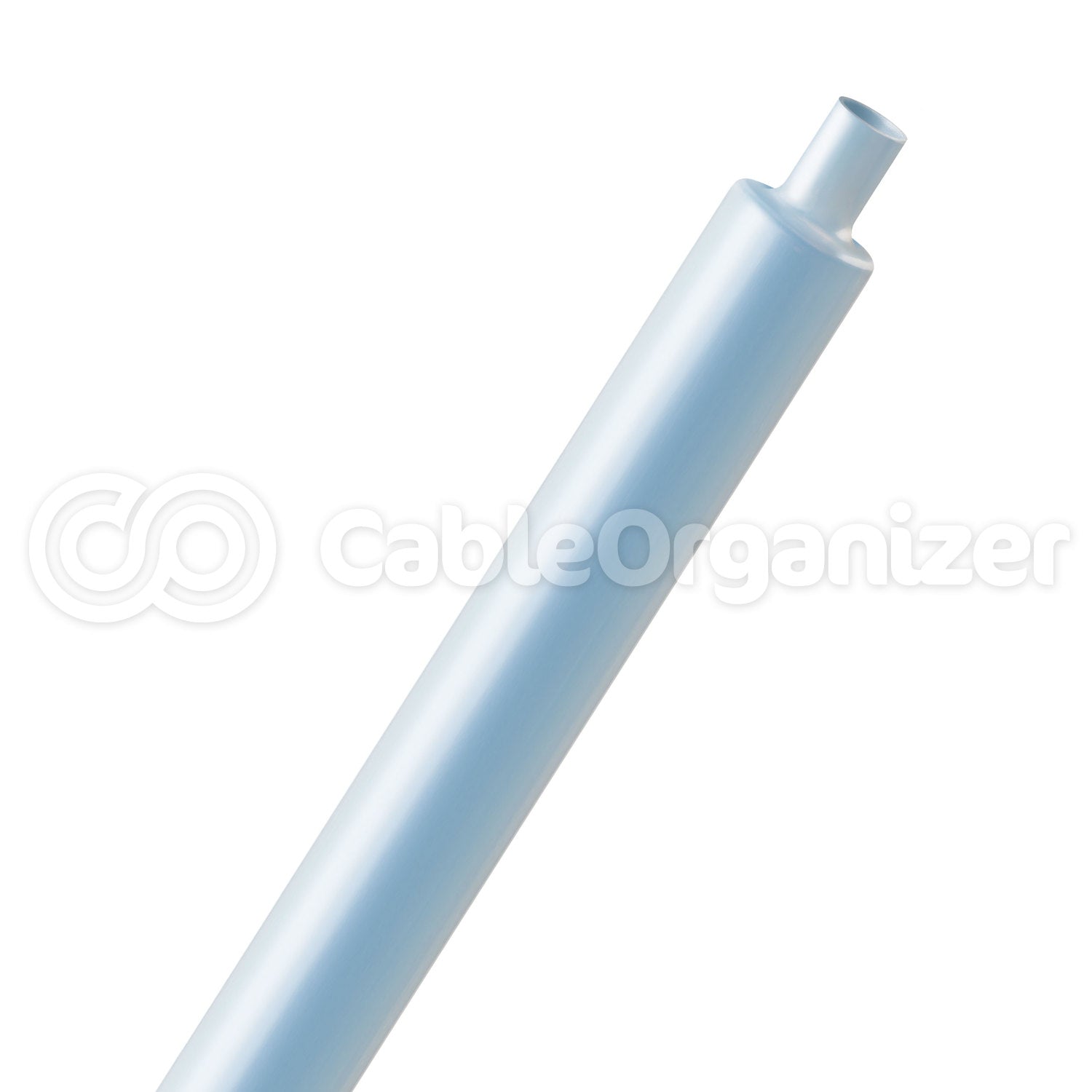
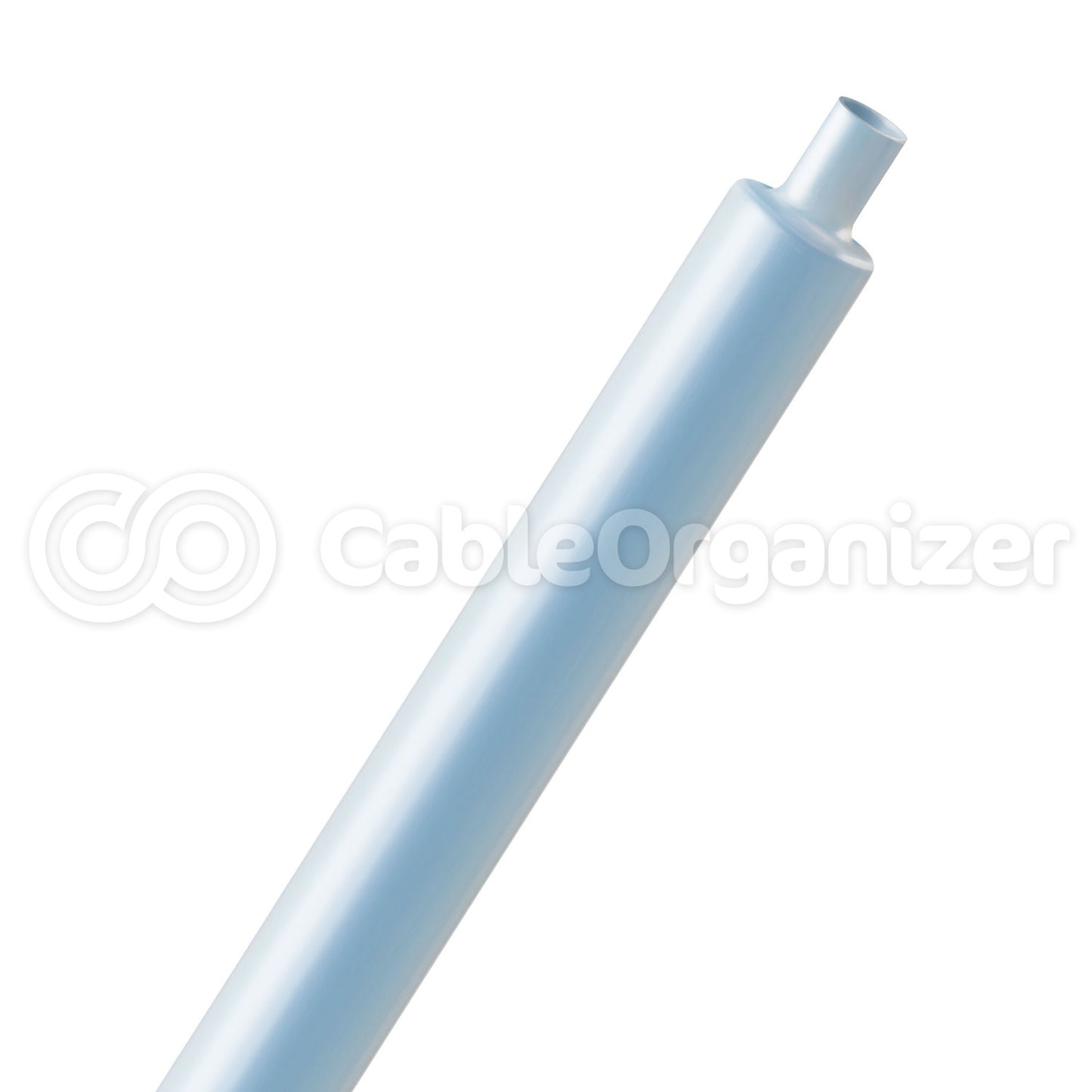
PTFE heat shrink tubing is available in 2:1 and 4:1 shrink ratios, and is widely used in military applications (AMS-DTL-23053/12), industrial, biomedical, chemical and analytical sciences because of its high continuous use temperature (250°C), and outstanding chemical resistance.
PTFE heat shrink tubing is the most difficult of the three fluoropolymer materials to shrink due to its extremely high shrinking temperature (325-340°C). You can use a heat gun or welding torch to shrink TFE, but these methods have a tendency to cause the material to overheat in small areas, while under-heating other areas, causing uneven shrinking and potential burning of the material. The most reliable method for shrinking PTFE is the use of a controlled temperature oven; however this is impractical with large harnesses or temperature sensitive components.
A few notes on shrinking PTFE:
- Always assure good ventilation in the immediate work area prior to beginning the heat shrink process. Fumes may cause nausea and dizziness.
- It is imperative that the tubing be heated uniformly until it becomes clear (gel state). This transition from crystalline to amorphous must take place, since shrinkage will only occur during recovery from the gel state (re-crystallizing).
- When using a mandrel to shrink the tubing, it is important to pre-heat the mandrel to assure even and uniform shrinkage.
- If the tubing begins to crack, chances are you overheated the material.
- Also, higher shrink ratios will require higher shrink temperatures.