Skip to content

Electricians Guide to Wire Nuts
By: CableOrganizer®
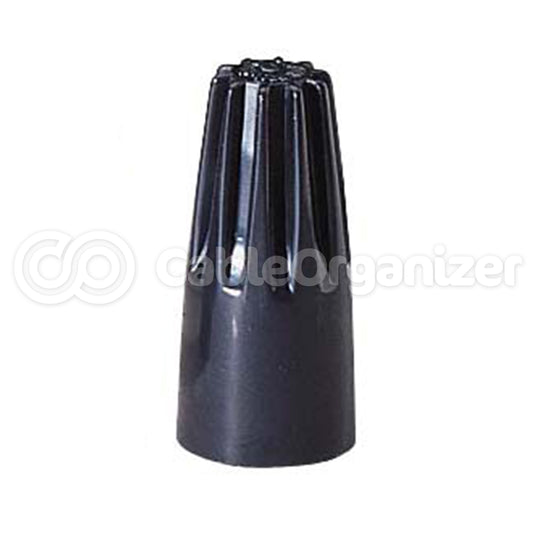
 Wire nuts are one of the most common electrical wire connectors used in electrical work, but not all wire nuts are made for the same application. Knowing the differences can help electricians work more safely, efficiently, and confidently. Different wire nuts and wire connectors are designed for different environments, wire combinations, and job conditions. This guide explains the types of wire nuts and connectors available and how to use wire nuts and connectors.
WIRE NUT COLOR CODE AND SIZE GUIDE
Wire nuts are often color-coded by size and application, though exact specifications can vary by manufacturer. This wire nut color chart gives a general guide by AWG and voltage:
Color Wire Nut |
AWG |
Voltage |
| Gray | 22-16 AWG | 300V |
| Blue | 22-14 AWG | 300V |
| Orange | 22-14 AWG | 600V |
| Yellow | 18-12 AWG | 600V |
| Red | 18-6 AWG | 600V |
STANDARD WIRE NUTS FOR INDOOR ELECTRICAL WORK:
 Standard wire nuts create secure, insulated electrical connections in dry, indoor residential applications. Standard wire nuts should never be used for outdoor lighting, sprinklers, or underground projects. Another kind features a wing design called twist-on wire connectors that provide comfort during installation, making it easy to grasp and install wires. These indoor electrical wire connectors are ideal for applications ranging from 300V to 600V, such as exit signs, emergency lights, lighting and luminaires, and low voltage wiring.
HIGH TEMPERATURE WIRE NUTS FOR HIGH-HEAT APPLICATIONS:
 High-temperature wire nuts are specialized heat-resistant wire connectors designed to withstand extreme heat build-up found in high-wattage light fixtures and signs. High Temperature wire nuts are usually made from ceramic or high temperature thermoplastic to prevent melting and ensure connection stability in industrial lighting and appliance applications. These high-heat electrical connectors are also commonly used in heating and cooking applications, such as industrial ovens, dryers, and electric heat elements, and industrial applications such as automotive engine compartments and manufacturing machinery.
WATERPROOF CONNECTORS FOR OUTDOOR AND DIRECT BURIAL USE:
 Waterproof connectors are made waterproof through a combination of tight mechanical seals and internal, protective compounds that prevent water, humidity, or other contaminants. These outdoor wire connectors are commonly used for landscape lighting, irrigation systems, outdoor infrastructure, telecommunications, and direct-burial wire connectors applications. Key benefits include moisture protection and high durability.
PUSH-IN WIRE CONNECTORS FOR FAST, COMPACT INSTALLATIONS
 Push-in wire connectors are easy-install wire connectors that have clear windows at the contact point for easy connection inspection. They are ideal for a variety of electrical wiring installations, including receptacles, switches, occupancy sensors up to 600V and light fixtures or signage up to 1000V. These compact wire connectors are flatter than the standard wire nuts, making them ideal where space is limited. They have a smaller range of wire gauges, usually 22-12 AWG.
HOW TO USE WIRE NUTS:
Step 1: Safety First! Turn off the power to the circuit at the main breaker box before starting any work. For extra protection, it is recommended to use a voltage tester.
Step 2: Use wire strippers to remove about ½ to ¾ inch of the insulation from the end of each wire.
Step 3: Hold the stripped ends of wires together, ensuring the insulation on all wires is level and copper ends are aligned.
Step 4: Use linemen pliers to twist the bare copper ends together clockwise. While this step is not necessary, it can ensure a tighter and more reliable connection.
Step 5: Place the wire nut over the exposed wires and twist clockwise until it is very snug.
Step 6: Gently pull on each individual wire to ensure it is firmly held by the nut.
Step 7: (Optional) Add electrical tape around the connector and the first inch of the wire for extra protection.
Step 8: Be sure to restore power and test the connection.