Tips and Advice on Heat Shrink Labels

  1. Heat Shrink Sleeve Materials
  2. Gravure for Heat Shrink Sleeve Print Processing
  3. Benefits of Flexographic Print Technology
  4. Methods for Applying Heat Shrink Labels
  5. How Heat Shrink Tubing Works
  6. What Heat Shrink Guns Can Do
  7. Smallest Heat Shrink Tube Labeler on the Market
  8. Heat Shrink Labels On The Rise
  9. Dimensions Needed for Ordering Heat Shrink Tubing
  10. Teflon Heat Shrink Adds Strength, Durability


Heat Shrink Sleeve Materials

There are different types of heat shrink sleeve materials on the market. Read on to learn about PVC, PET and OPS products.

neon heat shrinkPVC shrink labels - this material is easiest to control in the shrink process and is generally the most cost effective. PVC offers good scuff resistance.

PET shrink labels - this material offers the best scuff resistance and also the highest percentage of shrink. It is easily recycled.

OPS shrink labels - more cost effective than PET and offers the lowest vertical shrink and therefore the most consistent finish. It is often used for "squeezy" containers.

Return to Top


Gravure for Heat Shrink Sleeve Print Processing

Gravure printing is a proven technology and high quality printing method using solvent based inks. The graphics for each color is etched onto individual metal cylinders.The benefits of gravure printing include:

  • High quality photographic reproduction
  • Reduced size text for extra information and special offers
  • High quality origination gives consistency of reproduction over a long time period.

Return to Top


Benefits of Flexographic Print Technology

Flexographic heat shrink sleeve processing has many benefits, such as its low cost and high quality production. But what is it exactly?

There is Central Impression (C.I.) Flexographic print technology and UV Flexographic technology.

C.I. Flexo is a solvent based process, based on a raised areas such as dots, lines or blocks on a photopolymer plate. Ink is transferred onto a plate and then the film and each color unit prints in sequence.

The greatest benefit of UV Flexo is the immediate achievement of finished print, ready for subsequent processing. This is obtained through the UV light crosslinking the wet ink to give a dry product. Therefore, the time for the print either to oxidize or to lose the slow evaporating solvents has been eliminated.

UV Flexo utilizes the same printing plates as C.I. Flexo, but is a solvent free ink process. Each color is printed onto the film on a separate station and is cured by the use of UV lamps. This gives greater depth of color and reproduction than C.I. Flexo.

The benefits of both include:

  • Low cost, high quality reproduction
  • Rapid response due to shorter origination process
  • Suited to promotional and labeling requirements
  • Multi variant possibility

Return to Top


Methods for Applying Heat Shrink Labels

There are two methods of applying heat-shrink labels: full-body shrink sleeves and roll-fed systems.

Both involve placement of a plastic film, averaging 50 microns in thickness, around a bottle and the application of heat. The heat shrinks the film to the contours of the bottle.

Shrink sleeves are the more common technology, but roll-fed techniques are catching up quickly.

Return to Top


How Heat Shrink Tubing Works

cables in hstHeat shrink tubing is the most convenient way to label and organize wires, cables, cords and conduit. Heat shrink tubing is an alternative to some other approaches to insulation such as taping or molding in place. The tubing can come in a wide range of sizes, colors, and materials. When heated, it shrinks to conform to the size and shape of the underlying material, making installation fast and easy.

Here's how it works:

  • Print out the heat shrink label
  • Slide it over the wire or cable to be labeled
  • Once the label is in place apply heat to the label
  • It shrinks to fit securely over the item

The result is a flexible and durable marker that keeps its look for years. Experts say to avoid overheating heat shrink tubing or it can become brittle or char.

Options for conductive heat shrink wire connectors include: EMC shrinkMate heat shrink wire connectors. These are composed of MIL Standard R-46846 polyolefin tubing and a highly conductive Polymer Thick Film silver inner diameter coating. The coating shrinks with a heat gun, oven, or any other conventional heat source. When the tubing is set, the inner conductive layer provides an electrical connection between the outside surface of the objects that are joined by the tubing. Coaxial cable butt joints and cable to shielded connector housing joints can be made fast and easy and without the use of solder.

Return to Top


What Heat Shrink Guns Can Do

heat shrink gunHeat shrink guns are used for shrinking heat shrink tubing, shrink wrap, removing paint, loosening adhesives, tiles, drying objects, defrosting a freezer, stretching and bending vinyl, plastic and PVC, activating adhesives, stripping or removing paint or varnish, for automotive repair, and the loosening of rusted nuts, bolts and fittings. Guns range in the degree of heat they emit. The intensity of the heat can range from around 250° F to upwards of around 2500° F.

Return to Top


Smallest Heat Shrink Tube Labeler on the Market

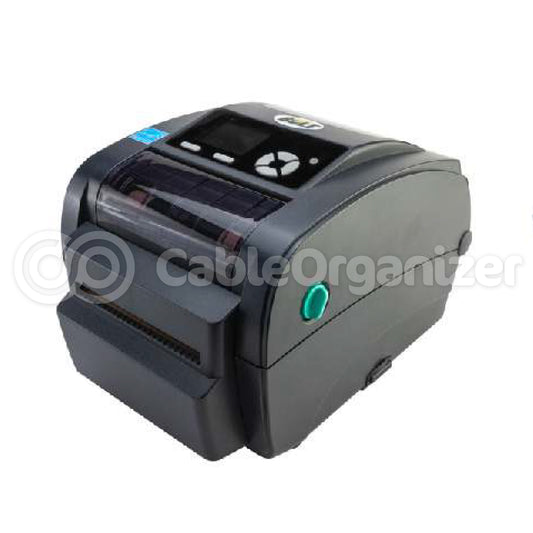
Marking wires, cables, tubes, and conduit, using heat shrink tubes in an easy and cost effective way can be done with products such as K-Sun LABELShop 2001XLST.

This is the smallest, most portable heat shrink tube labeler on the market. It's designed specifically for marking on specialized tube material that shrinks to fit perfectly. The K-Sun LABELShop uses special industrial grade polyolefin heat shrink tube material that is flame, temperature, chemical, water and abrasion resistant

For regular heat shrink tubing, consider these two types of tubing:

  • High temperature fluoropolymer heat shrink tubing: with its chemical resistance and high temperature resistance, it might be the perfect solution for you. This product protects cables, tubes and other objects. The products conform to both military and commercial standards, and in most cases exceed those standards. Fluoropolymers offer increased lubricity for easy sliding, and low moisture absorption for enhanced dimensional stability.
  • Chlorinated Elastomer (Neoprene?) heat shrink tubing: used for insulation, strain relief, and abrasion protection on cable harnesses and wire bundles in military and aerospace industries. It provides fluid and solvent resistance, including lubricating oil, aviation and ground-vehicle fuels and hydraulic fluids. Neoprene remains flexible at low temperatures.

Return to Top


Heat Shrink Labels On The Rise

labeled wiresHeat shrink plastic labels for packaged foods, beverages and other consumer products are on the rise as marketers seek to differentiate their products on crowded store display areas and shelves.

Heat-shrink labels are already identifiable with buyers of coffee creamer, flavored milk and drinkable yogurt. Heat shrink labels are also finding their way onto the packaging of juice, bottled water, pet food, pharmaceuticals, cosmetics, lawn-care and auto-supply products.

Several advantages of heat shrink labels are:

  • Heat-shrink labels can provide eye-catching, high-quality, 360 degree wraparound graphics on a blow-molded plastic bottle or container.
  • They cling tightly to just about any bottle shape.
  • When extended to cover necks, caps and lids, the labels can add tamper-evident features to a container.

Return to Top


Dimensions Needed for Ordering Heat Shrink Tubing

When you are ordering heat shrink tubing, you need to know certain dimensions.

heat shrink tubing drawingYou will need to know:

  • The expanded dimension
  • The recovered dimension

The expanded dimension is what the tubing measures when it is in its expanded state. The recovered dimension is what the tubing measures when it is heated and recovered on the rod. If you do not know these dimensions, it is helpful to know what the outside diameter is of the object you are putting the heat shrink over. You should also know whether you want the heat shrink supplied in coils or straight lengths.

Return to Top


Teflon Heat Shrink Adds Strength, Durability

For extra strength to your heat shrink tubing, order it in PTFE, which is a fluoropolymer resin. Other fluoropolymer resins for heat shrink tubing include FEP and PFA.

PTFE heat shrink tubing is the most difficult of the three fluoropolymer materials to shrink due to its extremely high shrinking temperature. PTFE heat shrink tubing is available in 2:1 and 4:1 shrink ratios, and is widely used in military applications because of its high continuous use temperature and outstanding chemical resistance.

high temperature hstYou can use a heat gun or welding torch to shrink PTFE but these methods have a tendency to cause the material to overheat in small areas, while under-heating other areas, causing uneven shrinking and potential burning of the material. The most reliable method for shrinking PTFE is the use of a controlled temperature oven; however this is impractical with large harnesses or temperature sensitive components.

Heat shrinkable Teflon tubing or Teflon heat shrink are common names for PTFE heat shrink. Teflon is a registered trademark of DuPont and refers to the three fluoropolymer resins PTFE, FEP, and PFA. These three plastics share common properties such as lubricity, chemical resistance, high temperature resistance and more. There are slight mechanical differences that make each tube uniquely suited for different applications.

  • About PTFE: the unique properties of PTFE have made it the polymer of first choice for many advanced applications. With the lowest friction of any polymer and a broad working temperature range, PTFE has been designed into products from advanced medical devices to high temperature industrial equipment. PTFE has become a choice plastic for the chemical and analytical sciences industries.
  • About FEP: While similar to PTFE, FEP has some distinct differences. It has lower continuous service temperature and is more transparent than PTFE. FEP also has better gas and vapor permeability properties and excellent UV transmission ratings.
  • About PFA: PFA was developed to increase the continuous service temperature of FEP resin. Melting process allows PFA to be processed in longer continuous lengths than PTFE. It combines the attributes of PTFE and has a smoother surface texture than FEP and PTFE.

For a product that contains the benefits of all both PTFE and FEP, consider using PTFE/FEP Dual Wall Shrink Tubing.

PTFE heat shrink tubing is available with a "dual-wall" construction. It is constructed with an outer layer of heat shrinkable PTFE and an inner layer of FEP. It is easy to apply, and is designed to provide a tight, moisture-proof bond over wires, cable, connectors, splices, terminal, etc. During application, the PTFE shrinks tightly over inserted parts, while the inner layer of FEP melts and flows to encapsulate parts and provides a tight moisture-proof seal.

Return to Top


Currency
Converter


Shop with Confidence